
Default Settings
It's best to do this before you launch JG HUD within your server. If you've allowed users to edit their own settings in the past, those settings will take precedence over your new default settings profile.
JG HUD lets you set default settings for all users. These can include anything users can usually adjust, including colours, visibility of components, size, position and more.
Creating & exporting a default settings profile
To create a default settings profile, go into /settings in game as you usually would to adjust your own HUD.
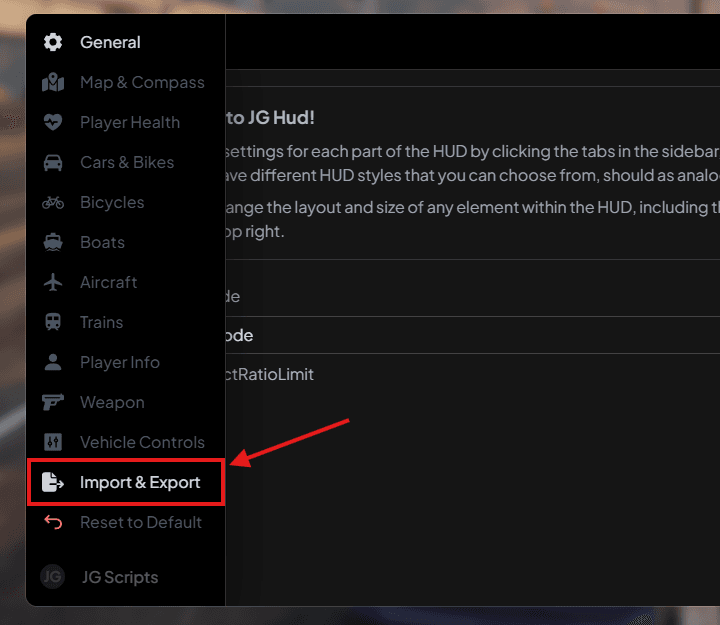
Once you're happy with the settings you've adjusted, you need to export them to JSON. Click the "Import & Export" tab on the left-hand side.
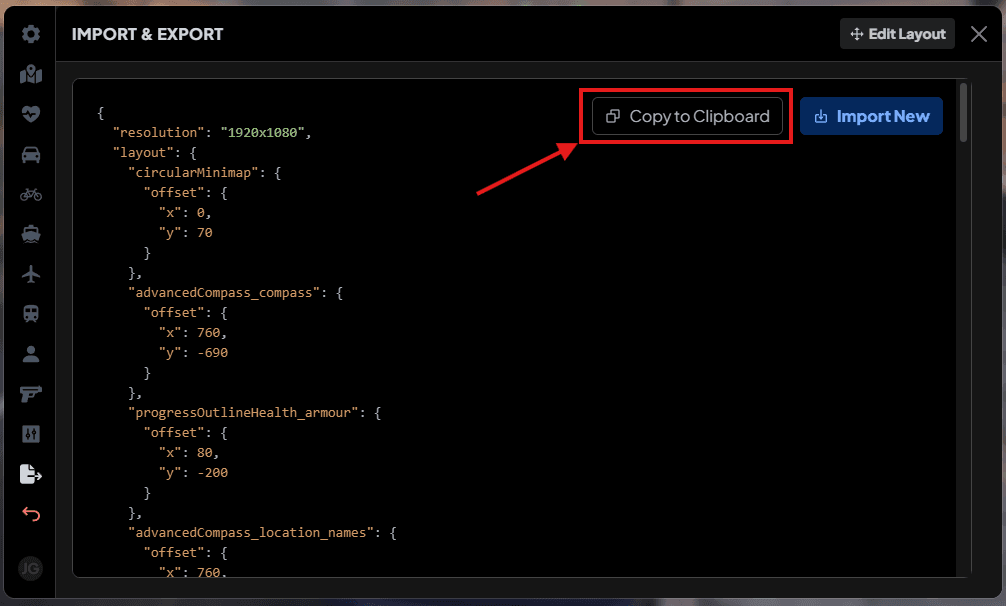
Once in this tab, click "Copy to Clipboard" to copy the configuration JSON.
Making the settings profile your server default
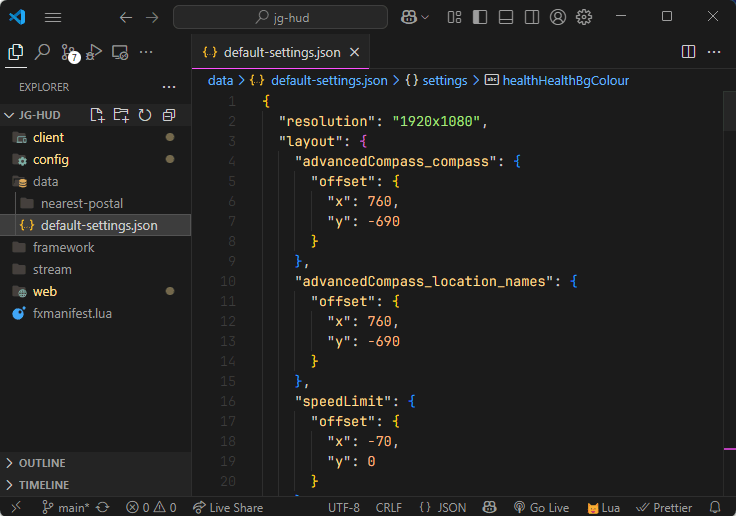
Now that you've got the JSON on your clipboard, you need to add it to a file within the resource's code. We've created one for you inside the data folder, called default-settings.json (full path: jg-hud/data/default-settings.json).
You can also make your own file wherever you'd like (within the jg-hud resource folder), and point to its location using the config option Config.DefaultSettingsData.
Once you've got the correct file, open it in a text editor and paste in the JSON from your clipboard. Like this:
Important additional info and settings
This will now be the default profile for all new users of JG HUD in your server. For existing users, their current settings/layout will take precedence.
It's therefore best to set this up before players join your server and use JG HUD for the first time.
If you want players to always use the exact configuration you've made for them, set both of the following config options to false. Players will then always see whatever is in the default settings JSON file. Preventing users from changing their settings, especially the layout of the HUD, is not recommended. Some people are on a larger screen and may want to make certain components larger and easier to see.
Config.AllowPlayersToEditSettings = false
Config.AllowUsersToEditLayout = false
If you're allowing users to change their settings/layout, they can reset to your new defaults via the "Reset to Default" tab on the left of the settings panel. The defaults will come from the file you've set up.
Have fun configuring!
Last updated 21 July 2026